
By Ann Griffin, Director of Advocacy
What to Do If You Find a Stray Dog
Safety First: Approaching an Unknown Dog
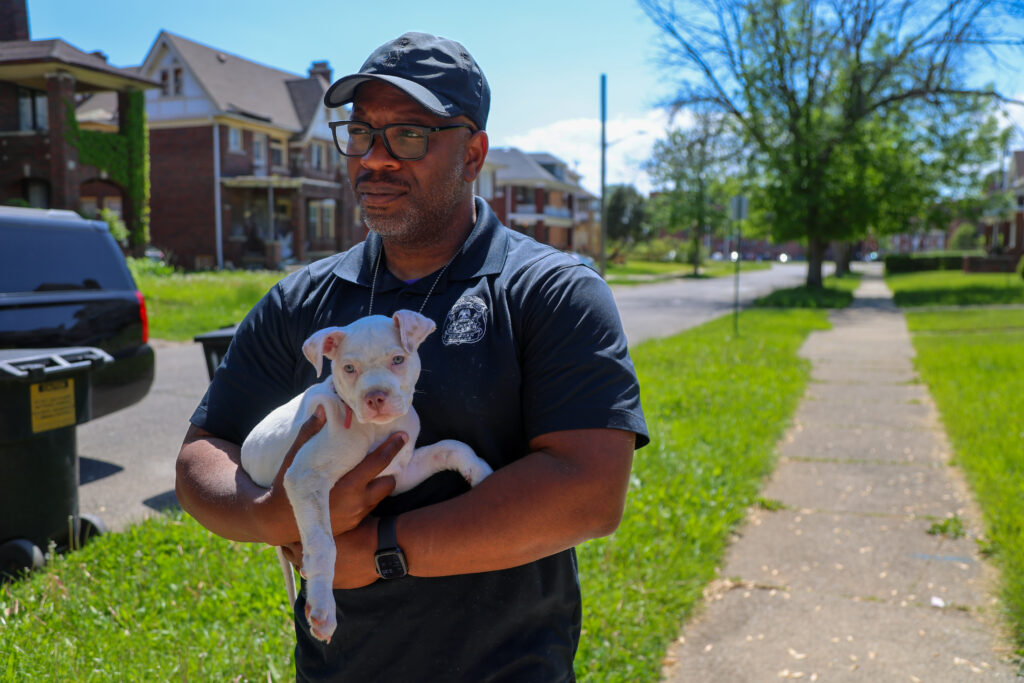
Safety first! You don’t know the dog’s temperament. Even if he or she is someone’s pet, stress or “stranger danger” may make the dog fearful. Approach calmly and quietly. If the dog is aggressive or runs away, do not approach or try to restrain him or her. Call your local animal authority. You can find a list organized by city here. Provide an accurate description of the dog and details about where he or she was last seen. If you can, take pictures of the dog to share with authorities and post on social media.
How to Identify and Locate a Lost Dog’s Owner
If the dog does not have any visible ID, he or she may still have a microchip. You can have the animal scanned for a microchip at a veterinarian’s office or shelter. Some communities also have self-service microchip scanning stations. If the owner has been diligent about keeping their contact information up to date with the microchip company, you can use the information received through scanning the microchip to contact the owner.
Understanding Your Legal Obligations in Michigan
If the dog has no identification and you weren’t able to locate the owner, even if you want to keep the dog, “finders keepers” is not a recognized legal principle and does not apply. Legally, animals are property, and the dog may be someone’s beloved pet. Michigan law requires that you report the stray dog to your police department or sheriff’s office within 48 hours. Failure to report a stray dog is a misdemeanor. Some municipalities have ordinances that require you to take the dog to the animal shelter that serves your community, and you may prefer to do that. Other cities may permit you to care for the dog in your home while looking for the owner. (Check the city’s website or municode.com for local ordinances.) Either way, it is also advisable to reach out to your local shelter and let them know you found a dog. You can find a list organized by city here.
Where to Report a Stray Dog: Animal Control vs. Protection Shelters
Your local shelter may be an animal control shelter or an animal protection shelter. A past article explained the similarities and differences between these types of organizations, and one important distinction relates to their authority to take a stray dog. In cities and counties where they exist, animal control shelters are primarily responsible for picking up, housing, and caring for stray animals. According to Michigan law, an animal protection shelter (such as Michigan Humane) is not authorized to take stray animals unless a city or county that does not have its own animal control shelter contracts with the animal protection shelter to provide those services for the community. For example, Michigan Humane’s Westland shelter has animal sheltering contracts with ten municipalities, including Canton, Dearborn Heights, Hamtramck, Highland Park, Livonia, Northville Township, Oak Park, Redford, Wayne, and Westland.
This division of authority exists so that the members of a community know where to look for their pets when they are missing. For example, if someone finds a stray dog in St. Clair Shores, Macomb County Animal Control is the organization with authority for that stray dog. If an animal protection shelter or rescue were to take the dog in, the owner may not check with that organization because he or she would not know to look there. (On a related note, if your dog is lost, be sure to check with the animal shelter that serves your city and the animal shelters in any adjacent cities to which your dog may have traveled. A dog on the loose is probably following his or her nose and is obviously not constrained by city boundaries.)
If you are permitted to hold onto the dog while you look for the owner and wish to do so, start by checking with neighbors to see if anyone knows the dog. While many factors can impact how far a lost dog will roam, one study showed that 42% of lost dogs were found within 400 feet of their homes. Post flyers in your neighborhood. You can also post information online through your community’s and For the Love of Louie’s Facebook pages, apps like Nextdoor, and sites like Petco Love Lost and FidoFinder.
There is no Michigan law that dictates when a stray dog legally becomes a finder’s property. You may live in a community with a local ordinance that defines an “owner” as someone who has a right of ownership in the dog or who harbors or keeps a dog, sometimes for a specific period of time. According to common law principles (the body of law based on court decisions), a dog’s original owner would typically have superior ownership rights over someone who found the dog. However, it is worth noting that the Supreme Court of Vermont held that the finder of a dog who made diligent efforts to find the dog’s owner and cared for the dog for a year was entitled to ownership in a lawsuit brought by the dog’s original owner. In a rare published appellate court decision on the issue, the court held that “the public interest in encouraging finders to care for and shelter lost pets necessarily qualifies the owner’s right to possession.”
Michigan Humane strongly encourages all pet owners to be sure their pets have visible identification (a collar and tags) and a microchip. To be effective, both types of identification must provide current, accurate contact information. [You can make an appointment to have your pet microchipped at one of our veterinary clinics by calling 866-MHUMANE (866-648-6263).]
We are going to keep working to improve animal welfare and create a more humane community while serving as a voice for the animals through advocacy. Together, we can continue to make a difference in animals’ lives. If you know someone who you think would be interested in this information, please forward this to them and encourage them to sign up for our Legislative Action Network.