
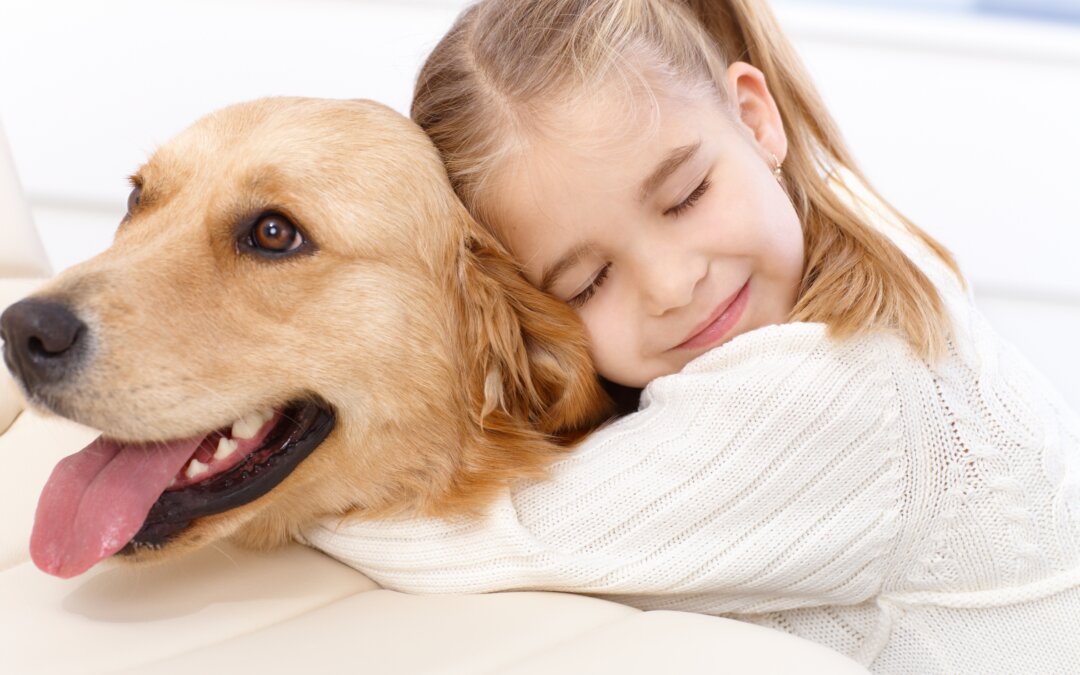
Jeeter, a service dog for a boy with cerebral palsy, became the first courtroom support dog by happenstance. The boy’s mother, Ellen O’Neil-Stephens, was a deputy prosecutor in the juvenile drug court in the King County Prosecuting Attorney’s Office in Seattle. One day, while her son was with a caretaker, she took Jeeter to work with her. Jeeter had a positive impact on the people he met, and he began going to work with O’Neil-Stephens once a week. Seeing Jeeter’s calming influence, prosecutors asked if Jeeter could sit with children who were having difficulty testifying regarding abuse they had suffered. Seeing the support Jeeter provided to these children, O’Neil-Stephens realized that the court needed its own support dog. In 2004, Ellie joined the court as the first courtroom support dog placed in a U.S. court by Canine Companions for Independence.
O’Neil-Stephens left her position with the prosecutor’s office and founded Courthouse Dogs Foundation. Courtroom support dogs are typically under the guardianship of a government or nonprofit organization, but they live with their handlers. The organization describes courtroom support dogs this way:
Courthouse facility dogs are professionally trained dogs working throughout the country in prosecutor’s offices, child advocacy centers, and family courts. They primarily provide a calming influence for children during stressful legal proceedings. As legally neutral companions for witnesses during the investigation and prosecution of crimes, these dogs help the most vulnerable witnesses feel willing and able to describe what happened. The dogs also provide emotional support to participants in family court proceedings and in specialty/treatment courts.
If you share your life with animals, you know the comfort they can provide. Studies have shown that interacting with an animal can lower the stress-related hormone cortisol and lower blood pressure. One study on the effects of a dog’s presence on children found that children’s cortisol levels went down and oxytocin levels went up in the presence of a dog. A courtroom support dog has this effect on traumatized witnesses, allowing them to testify clearly and completely while reducing further trauma.
According to Courthouse Dogs Foundation, there were 303 courtroom support dogs working in 41 states as of August 4, 2023. In eighteen states, the use of a courtroom support dog is permitted in some legal proceedings by virtue of a state statute. Michigan is one such state.
The Michigan Revised Judicature Act was amended effective September 2018 to make the use of courtroom support dogs available to witnesses testifying in certain types of criminal cases. The specified types of criminal cases involve child abuse and child sexual abuse, criminal sexual conduct and assault with the intent to commit criminal sexual conduct, home invasion, and some crimes specific to vulnerable adults. The statute currently defines a “witness” as a person who is a victim of one of the specified types of crimes who is under 16 years of age, is 16 or older with a developmental disability, or is a vulnerable adult. The statute defines a “courtroom support dog” as a dog who:
has been trained and evaluated as a support dog pursuant to the Assistance Dogs International Standards for guide or service work and that is repurposed and appropriate for providing emotional support to children and adults within the court or legal system or that has performed the duties of a courtroom support dog prior to September 27, 2018.
A bill has been introduced to amend Michigan’s statute permitting the use of courtroom support dogs to make their support available to more people and to expand the definition of “courtroom support dog.” The bill changes the definition of “witness” to include, “[f]or the purpose of being eligible for a support dog under this section, an individual under 18 years of age or 18 years of age or older with a developmental disability” or a vulnerable adult. The bill would amend the definition of “courtroom support dog” to include “an animal-assisted therapy or facility dog approved by the chief judge or presiding judge of the court.”
Despite the benefits to those testifying in stressful situations, the use of courtroom support dogs has caused some legal controversy. For example, members of the defense bar voiced objections to a resolution by the American Bar Association (ABA) House of Delegates that “urged all jurisdictions to permit a specially trained canine to accompany an anxious or traumatized individual who is testifying in court. The resolution also urged actions to ensure these canines’ welfare.” The resolution passed 202-135.
Critics of the accommodation contend that a dog’s presence in the courtroom during the witness’s testimony may prejudice the jurors against the opposing party. They argue, particularly in a criminal case, that a dog may make the jury sympathetic to the witness, would suggest that the witness is undergoing therapy as a result of the defendant’s actions, or would portray the defendant as so menacing that the witness needs protection.
While the effect of the presence of a courtroom support dog on jurors has not been extensively studied, the research that has been done has shown that jurors were not influenced by their presence. The ABA outlined many ways to ensure that the use of a courtroom support dog does not prejudice the jury against the defendant, such as referring to the dog in a neutral way (“courtroom dog” or “courthouse dog”), making sure the dog is not visible to the jurors, and instructing the jury not to base any conclusions on the dog’s presence.
Michigan Humane supports the Michigan bill that would make courtroom support dogs available to more witnesses and broaden the definition of “courtroom support dog” so that more dogs are potentially eligible to serve in that role. The bill passed the Senate in a unanimous vote on June 14, 2023 and has been referred to the House Judiciary Committee.
We are going to keep working to improve animal welfare and create a more humane community while serving as a voice for the animals through advocacy. Together, we can continue to make a difference in animals’ lives. If you know someone who you think would be interested in this information, please forward this to them and encourage them to sign up for our Legislative Action Network.