
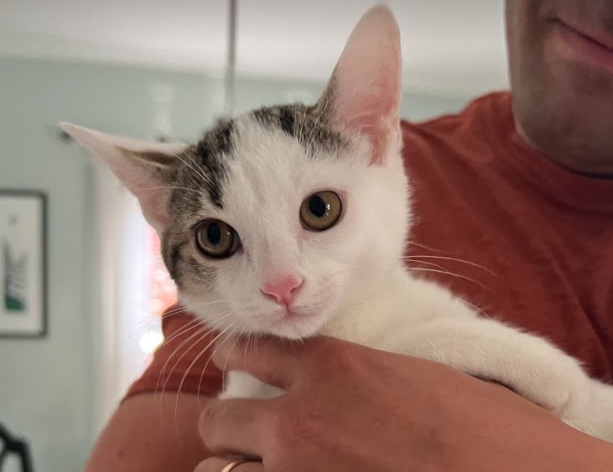
People who volunteer to provide foster care for animals in need save both animal and human lives. Michigan Humane helped to draft a bill that would provide a tax credit for people who foster animals on behalf of a registered animal control or animal protection shelter or a 501(c)(3) rescue. Introduced by Rep. Mike McFall (D- Hazel Park) as HB 5063, the bill is bipartisan and recognizes the invaluable service provided by foster caregivers and supports their lifesaving work. We are grateful to Rep. McFall for the opportunity to collaborate on this bill and for introducing it.
Animal shelters and rescues care for animals who are stray, are abused or neglected, or are simply unwanted by their owners. Foster caregivers are instrumental in helping overburdened shelters and rescues care for and rehabilitate these animals, giving them another chance at life in a loving home and saving shelter and rescue space and budget. Adopters benefit greatly from the addition of an animal to the family, and animals that have spent time in a foster home go to their adopters with additional information that will help in their adjustment. But the animal welfare industry has been faced with a new challenge – how to help people care for their beloved pets during a crisis without having to surrender their pets permanently.
The sacrifices people are willing to make to keep their pets have been highlighted in major disasters such as Hurricane Katrina in 2005, when 50 percent of people who refused to evacuate did so because they would not leave their pets behind. Research has shown that people will refuse or delay medical treatment, even leaving a hospital against medical advice, if they have no one to care for their pets. Victims of domestic violence will remain in an abusive situation for fear of what will happen to their pets if they leave. People experiencing homelessness will stay on the streets rather than enter a shelter if they cannot bring their pets.
In order to help people experiencing a health, domestic violence, or housing crisis to keep their pets, Michigan Humane created the Safety Net Foster Program to care for owned animals whose families are temporarily unable to care for them. These foster arrangements usually last 30-90 days, and typically, a foster home is needed urgently. Once the owner’s situation has stabilized, the animal is returned to them, keeping their family intact and avoiding the need to surrender a much-loved pet to an already overloaded sheltering system.
Foster caregivers are special volunteers, opening their homes and giving generously of their time and sometimes their personal finances to care for animals in need. Currently, the demand for foster volunteers far outweighs the supply, particularly for foster homes for owned animals. For the period January – June 2025, Michigan Humane has provided Safety Net fostering to 42 animals from 21 families. During that period, Michigan Humane’s call center received inquiries about the service from 441 families.
This bill would recognize and support the selfless work of foster volunteers on behalf of both people and animals in Michigan and would provide an added incentive that would assist shelters and rescues in recruiting foster caregivers. The bill safeguards against someone fostering “just for the money” by keeping the tax credit to a modest $50 per animal and capping the number of animals that can be fostered for a tax credit to five per year. Organizations will still carefully screen and train potential foster families, just as they do now.
To earn the credit, the animal must be fostered for at least seven days, with an additional $50 credit for each additional 30 days an animal is fostered. The credit would be available starting in the 2026 tax year, and the amount of the credit would be annually adjusted for inflation. The qualifying organization on behalf of which the animal is fostered will be required to provide verification of the fostering agreement and duration.
You can find more information about Safety Net fostering through Michigan Humane here. If you are interested in fostering Michigan Humane’s shelter animals to help them get ready for adoption, you can find information here.
We are going to keep working to improve animal welfare and create a more humane community while serving as a voice for the animals through advocacy. Together, we can continue to make a difference in animals’ lives. If you know someone who you think would be interested in this information, please forward this to them and encourage them to sign up for our Legislative Action Network at https://horizon-lab.news/advocacy/%3C/a%3E.