
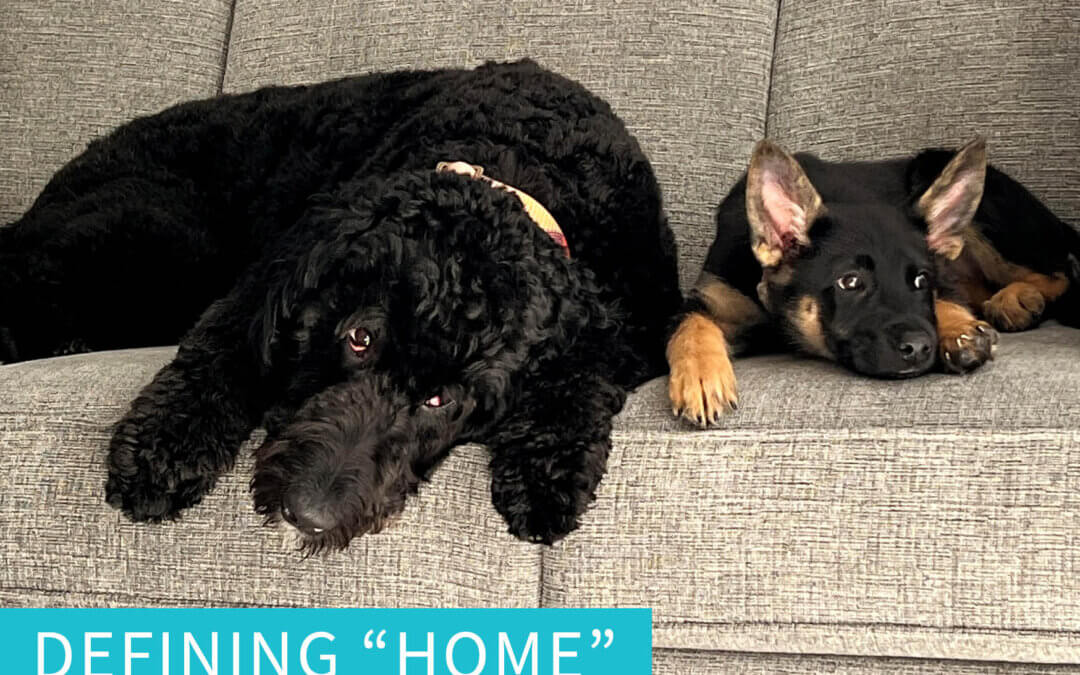
During December, Michigan Humane is focused on ways to give the gift of “home” to animals in our community. According to one survey of pet owners, their home was also home for their pets, with nearly 100% of them allowing their pets to sleep in the house and about a third allowing pets to sleep in a human bed.
Given the welcoming attitude toward pets in the home reflected in the survey, it may be surprising how few legal requirements there are around what constitutes an appropriate “home,” or shelter, for animals in Michigan. Michigan’s anti-neglect statute requires an “owner, possessor, breeder, operator of a pet shop, or person having the charge or custody of an animal” to provide adequate care, which is defined as “the provision of sufficient food, water, shelter, sanitary conditions, exercise, and veterinary medical attention in order to maintain an animal in a state of good health.” Shelter is further defined:
“Shelter” means adequate protection from the elements and weather conditions suitable for the age, species, and physical condition of the animal so as to maintain the animal in a state of good health. Shelter, for livestock, includes structures or natural features such as trees or topography. Shelter, for a dog, includes 1 or more of the following:
(i) The residence of the dog’s owner or other individual.
(ii) A doghouse that is an enclosed structure with a roof and of appropriate dimensions for the breed and size of the dog. The doghouse must have dry bedding when the outdoor temperature is or is predicted to drop below freezing.
(iii) A structure, including a garage, barn, or shed, that is sufficiently insulated and ventilated to protect the dog from exposure to extreme temperatures or, if not sufficiently insulated and ventilated, contains a doghouse as provided under subparagraph (ii) that is accessible to the dog.
Although it is important for the statute to be broad enough to encompass a wide variety of scenarios and provide law enforcement, animal control, and humane investigators with discretion, it is also important to give those front-line responders clear and enforceable standards and inform owners of the level of care required.
During the 2021-22 legislative session, Michigan Humane collaborated on a bill that would have amended the anti-neglect statute to provide more detail regarding what constitutes appropriate shelter for outdoor dogs. For example, the bill would have prohibited the use of certain types of shelter, such as a crawl space, metal or plastic barrels, animal carriers, transport crates, wire crates, the space under a vehicle, the inside of a vehicle (unless it is running appropriate climate controls), shelters made of cardboard, and shelters with wire or chain link floors, unless they were appropriately modified to provide the dog with adequate protection from extreme weather. At this point, it does not appear that the bill will pass this session, but we are hopeful that it will be reintroduced next session.
While Michigan’s anti-neglect statute imposes the minimum standards for shelter that must be provided, local communities may enact additional protections through their ordinances. For example, the City of Detroit ordinances include a more specific definition of “adequate shelter” to include shelter that:
(1) [Is] [s]uitable for the species, age, condition, size, and type of each animal;
(2) Provides adequate space for each animal;
(3) Is safe and protects each animal from injury, rain, sleet, snow, hail, direct sunlight, the adverse effects of heat or cold, physical suffering, and impairment of health;
(4) Is properly lighted;
(5) Is properly cleaned;
(6) Enables each animal to be clean and dry, except when detrimental to the species;
(7) During hot weather, is properly shaded and does not readily conduct heat;
(8) During cold weather, has a wind-break at its entrance and provides a quantity of bedding material consisting of straw, cedar shavings, or the equivalent that is sufficient to protect the animal from cold and promote the retention of body heat; and
(9) For dogs and cats, provides a solid surface, resting platform, pad, floor mat or similar device that is large enough for the animal to lie on in a normal manner and can be maintained in a sanitary manner.
Detroit’s ordinance further provides that “shelters whose wire, grid, or slat floors (i) permit the animals’ feet to pass through the openings, (ii) sag under the animals’ weight, or (iii) otherwise do not protect the animals’ feet or toes from injury are not adequate shelter.”
The City of Eastpointe ordinances include additional protection for dogs. In addition to defining shelter as the residence of the dog’s owner or another individual or a doghouse of appropriate size with dry bedding when the temperature is or is predicted to go below freezing, Eastpointe prohibits the following:
(3) It shall be unlawful to house or leave a dog of any breed or size unattended outdoors between the hours of 11:00 p.m. and 7:00 a.m.
(4) It shall be unlawful to house or leave a dog of any breed or size outdoors when the outdoor temperature is or is predicted to drop below 43 degrees or above 82 degrees.
(5) Housing a dog inside a garage or shed is providing inadequate shelter and further banned within the city.
Unlike state animal welfare statutes, which apply to the whole state and are typically more general, local communities have the ability to enact animal protection ordinances tailored to suit their individual needs. The specific details in these ordinances provide law enforcement and animal control with additional guidance regarding appropriate animal care standards and also put owners on notice as to what is required. Although some of the provisions included in local ordinances might not be appropriate for state legislation, amendments to Michigan’s anti-neglect statute are needed to provide clearer guidance to enforcement authorities and owners and to better protect animals.
We are going to keep working to improve animal welfare and create a more humane community while serving as a voice for the animals through advocacy. Together, we can continue to make a difference in animals’ lives. If you know someone who you think would be interested in this information, please forward this to them and encourage them to sign up for our Legislative Action Network.